Astrology is not Science
It Points the Way to Something Better

Science is Supernatural
Astrology and astronomy are not friends. I was taught in university that astrology is pseudoscience, a cautionary tale in critical thinking, a reminder to reject intuition and rely on statistics. The lesson did not even try to understand astrology, basing it only on the twelve sun signs of popular horoscopes rather than the millennia-old tradition of observing the cycles and alignments of the cosmos. Nevertheless, it seems that everyone who actually looks into astrology becomes fascinated by it.
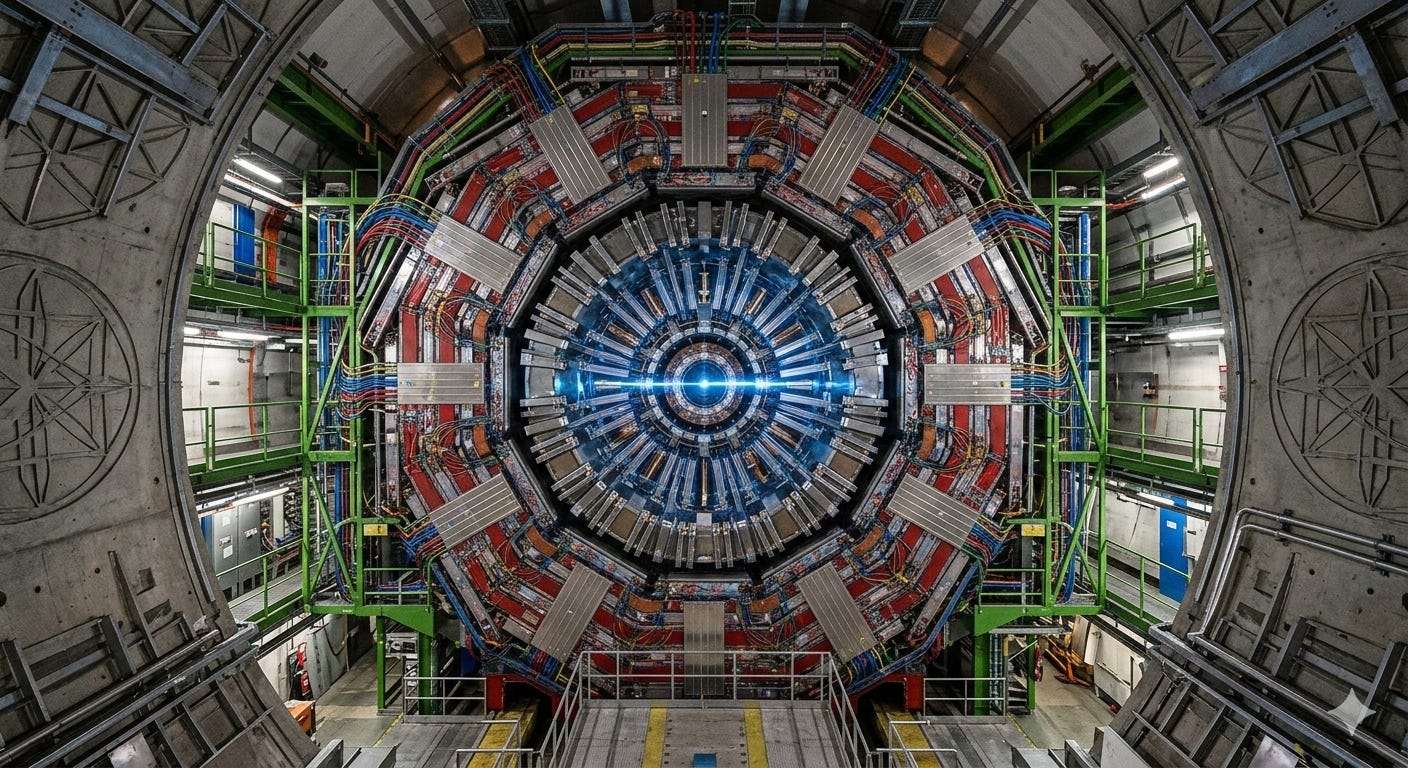
Our methods cannot measure up to the billion-dollar instruments of the physicists. Only in the past few decades have astrologers again conducted real experiments, after five hundred years of being left behind by the scientific community. Why? The Church, of course. Although the early astronomers were all mystics, they had enough on their plate convincing people the Earth went around the Sun. They simplified their tactics and dropped the alchemy, the parts that spoke to meaning, emotion, human relationships, and history. The payoff is we can now look billions of lightyears into the universe and bounce signals off satellites to talk to people around the world.
Science has become supernatural. Dreams of colonizing Mars, of curing aging and stress, are as wild as old religious claims, and provide a moral bypass to solving real problems like pollution and inequality. Without even going to Mars, the rockets create more pollution per second than any other human activity. Except in a few limited ways, science has lost its ability to improve our lives. Like a superstition, we are told to sacrifice what comes naturally for an imaginary technological paradise conjured by those who hold the wealth. Science has become the new Church, speaking with authority instead of curiosity.
The Curiosity Pump
But true science is based on observation, and on finding connections that are not obvious to common sense. Astrology is the science that can correct our course. Though it is based on watching the cosmos, there is a built-in connection to our internal world of feelings and intentions, and the whole continuum between Earth and Sky. Our lives—work, leisure, and mood—are still ruled by the seasons, even if we forget to celebrate the change at Ostara and other ancient astrological festivals. Just knowing the twelve signs is enough to tune in with the character of time through the year.
Deeper knowledge of astrology can tune us into cycles of history, like the 84-year cycle of Uranus in Gemini that indicates major wars for the United States, or even the million-year resonance between Earth and Mars that affects Earth’s ice ages. On a mystical level, science has no explanation for why the Sun and Moon appear the same size in our sky. No other planet experiences such a coincidence, and there’s nothing special about Earth that requires it. Yet in an astrological model, it is obvious.
Astronomer Graham Jones suggests a theory he calls the Curiosity Pump. What if the incredible coincidence of solar eclipses on our planet is what led our wild ancestors to develop calendars, math, and writing? Even on Earth, eclipses are only perfect now. Long ago, the Moon was closer and appeared much larger in the sky. Eclipses would have been more frequent and more predictable. In the distant future, the Moon will be further from Earth, and unable to eclipse the Sun. If Jones is correct, then intelligence could only evolve when it did, and thus astrology is part of what makes us human. There could be more opportunities for ascension waiting for us in astrological patterns.
This idea suggests that calendars are sacred, that culture based on seasonal rituals is the wellspring of consciousness, that astrology might pre-date language itself, that our minds are literally the patterns of space geometry come down to dwell on Earth. Such a model of reality helps us escape the affliction of linear time—with its limits on will and its fear of death—and recognize ourselves as purposeful movements of the astrological clock, a qualitative time. Not just chronos, time that can be measured as it passes, but also kairos, time that we can feel—time for a change, a well-timed word, time to get up and dance!
Free Will is Interconnection
Once we are not stuck in linear time, we can see our power to act through interconnection with everything. The movement of the planets is undeniable, so our free will lies in our ability to interpret it in whatever way we wish—at least, anything we can convince ourselves to believe. The butterfly effect takes place within us. But it is not an empty gesture: it is not a seductive delusion separate from the real world. Slavoj Zizek says, “A true act creates the conditions of its own possibility.” By reinterpreting reality, we not only build the future we want to see, but also change the meaning of the past which allows that future to be planted in the present.
If the United States does not mobilize for war while Uranus is in Gemini, we do not flush the whole theory and start from scratch. We look for the new pattern. Perhaps it is not a pattern of war, but of liberation: from monarchy, from slavery, from fascism, from...what, today? A skeptic may say we are projecting meaning onto random, meaningless events. Yet even so, that projection is made real by our collective belief. A culture ready for liberation instead of war just may find it.
Through astrology (or through tarot cards, or ceremonial magic) we translate our vision through culture’s deepest symbols and deliver it into reality. By holding fast to our vows and our boundaries, we ensure the future forms around these pillars. Intuitive arts are tools to crystallize symbols around thought-forms in order to make them more real.
These are topics that science is currently unable to deal with. Even with the uncertainty and non-locality of quantum physics, we have not yet internalized what participation really means. Our internal experience cannot be studied by physics. But the ancient science of astrology offers clues how this might come about. It is not just humans participating in the creation of reality moment by moment. The planets themselves are nodes of energy sweeping through the cosmos, with the permutations of time spiralling in their wake. We are part of the solar system, so the same forces that formed the planets in their orbits around the Sun are present in our cells, just on a smaller scale. The planets do not push and pull our fate with gravity, but with history. We all came from the same place, and we are connected by timey-wimey threads.
Our job as conscious beings is to create meaning from those spiral forces. It seems we are the only ones can, and it seems we can do little else. Meaning is what we are, more so than our bodies and their organic machinery. Meaning is the true story of the universe, not matter. Richard Tarnas wrote the book The Passion of the Western Mind as a history of thought, of how his culture has gradually created the meaning of meaning. The book became a bestseller and is used as a university textbook. It is less known that Tarnas is an astrologer, and the book came from tracking planetary conjunctions. He merely removed the mentions of astrology (into a different book) to make it accessible. The story of philosophy, of art, and of politics is the story of the planets and their cycles. As humans, we do not direct the planets, but we do decide how those energies emerge into consciousness—as individuals and as a society. We can see a history of destructive wars or a history of hard-fought liberation.
Astrology Adapts to Cultural Needs
The archetypes of astrology are connected to those of Tarot, Qabalah, chakras, and other esoteric systems. One attempt to unite such ideas is called Spiral Dynamics. Based on the Integral Philosophy of Ken Wilber, it describes a dialectical progression through stages of civilization, and their growing capacity for awareness. While we can imagine each planet as a stage of development, it is more interesting to consider astrology’s role in each stage. As a perennial philosophy—a practice that offers wisdom throughout history—astrology adapts to cultural conditions.
Animals already follow the cycles of day and night and the seasons of the year, so our conscious emergence began with curiosity about eclipses, perhaps among other phenomena in the sky. Where an animal might freak out at an eclipse and then forget about it, humans wondered what caused them and if they could be predicted: an early form of pattern recognition. From there, we became more sophisticated in our calendars, coming together to mark the sacred days when the seasons shifted, perhaps acting out ritual blessings to ensure the pattern continued. Astrology then became entangled with power. Rulers wanted to plan for their own fates, as well as action against rivals. Next, astrology was used for normative reasons: to manage extremes of personality, avoid accidents, and match couples for marriages. Astrology struggled to stay relevant during the rise of materialism, but a fringe still followed historical cycles and organized symbols for ritual magic. Then emerged modern astrology, a mostly personal practice of insight and growth. The next stages, emerging now, invite us to integrate our selves with the constraints of history we are born into, and to harmonize diverse perspectives in society as a whole. Astrology is once again adapting, and combining ancient techniques with a liberated approach to personality. Finally, astrology will guide us towards recognizing interconnection with everything, to find a path through the real world that is both graceful and meaningful.
But how does astrology work? That is a question not yet completely answered, like a unified theory of physics if it was also trying to explain how we think. It is a question so big that it may remain forever just out of reach. One thing is for sure: it works by helping people find meaningful connections we did not see before.
Written by one human in 2026. Illustrated by Nano-banana. If any human artists want to donate their illustrations, I would prefer it. Photo is Anita Ekberg by unknown paprazzo, 1960.